


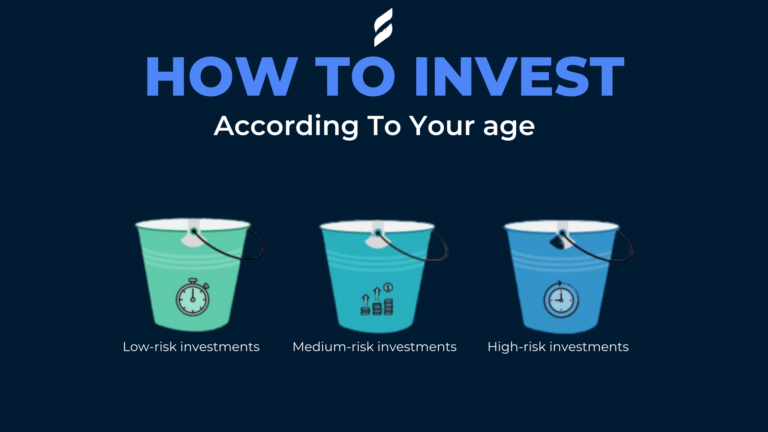
The most important investing rule is to match your investment with your age. Life changes as you get old; it is necessary that your investment portfolio does too. As your age increases, you should invest more of your funds into low-risk investments. Adjusting your investments to fit your lifestyle and needs will help manage your risk and protect your funds from loss.
Investing is one of the most effective ways to build your wealth, but it can also be a stressful commitment. There are a lot of things that change as you get older that may affect what you should be investing in and when. It can be hard to keep up with all these changes, so here is a quick guide for investments at every stage of life. This simple guide to investing by age will keep your investment portfolio on track for your future goals.
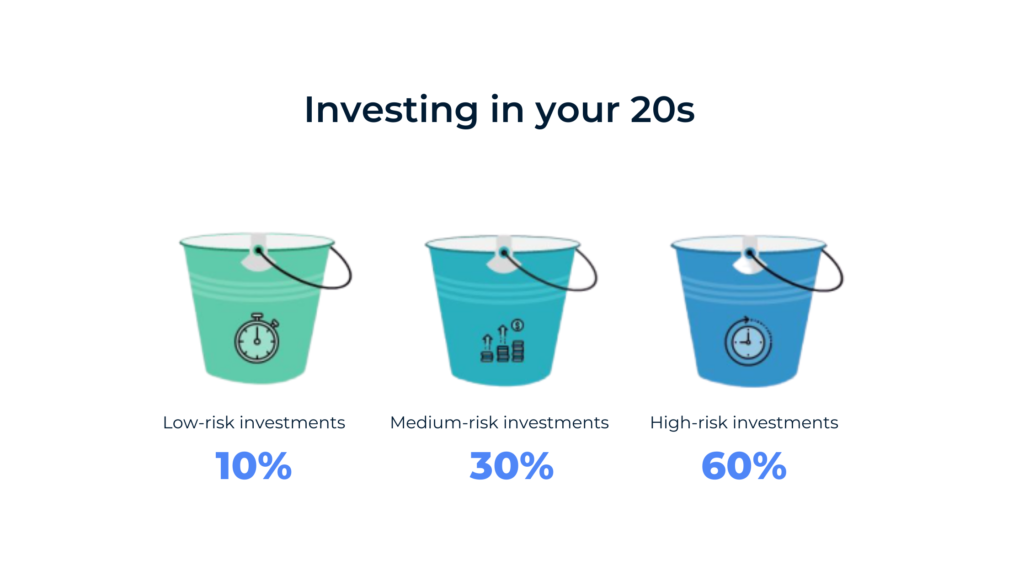
Investing in your 20s
Your tolerance for risk is likely higher at this age, and you need not worry about the market fluctuations. You have plenty of time to make up for any mistakes and can afford to lose some money early on. However, avoid going overboard with your investments—having a few safe bets is fine at this age.
If you really want a portfolio full of high-risk investments, ensure you have an emergency fund and savings in place first. That way, if the market fluctuates, it won’t derail your plans to buy a car or start saving for a home.
Focus on depositing money regularly in your investments and let the power of compound interest grow your funds over time. At this age, it is advisable to take advantage of the power of compounding returns. Compound interest is a powerful tool to grow your money and one of the best things about compounding returns is that they grow over time.
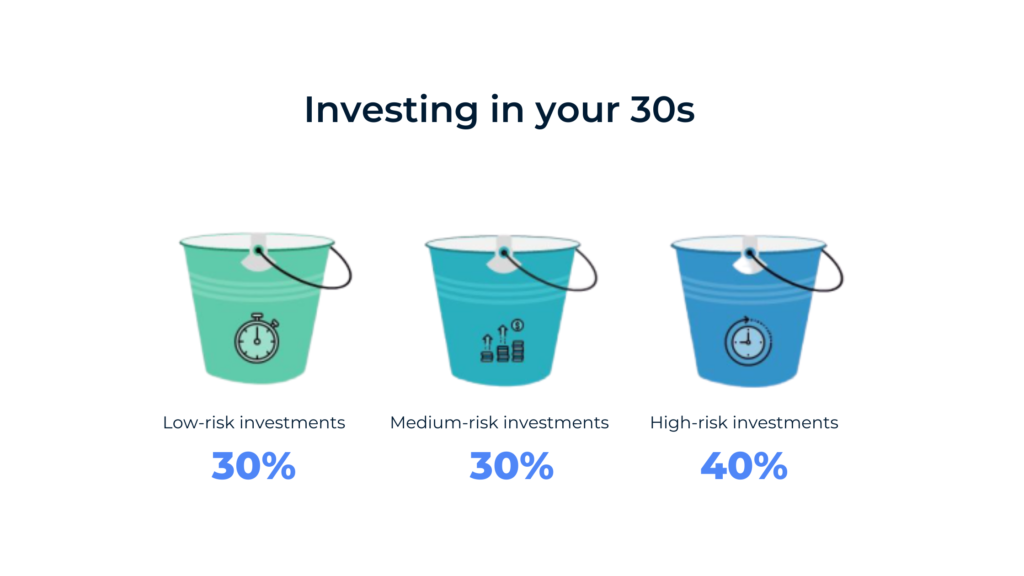
Investing in your 30s
You’ve started a family and have other things to think about, so your investments shouldn’t worry you as well. Start moving more of your funds into medium-risk assets for peace of mind.
If you’re not already investing regularly at this age, it’s not too late to start. You are still young enough to grow your money with the power of compound interest. Also, start contributing regularly towards your retirement as you still have 20-30 active working years. Your investments should be consistent with your long-term goals.
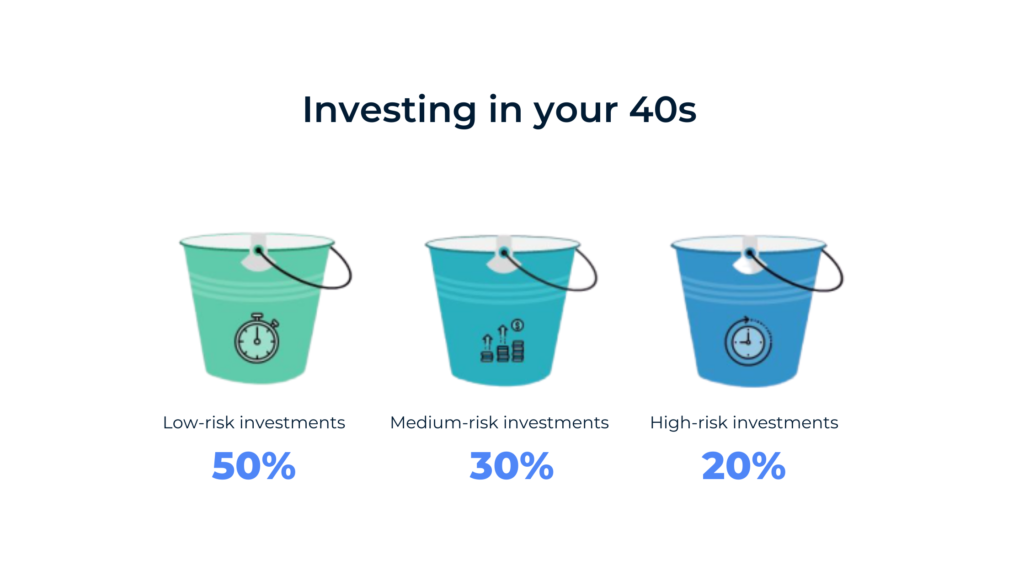
Investing in your 40s
Many people keep their portfolio investments fairly consistent from their 30s to 40s but, you should consider making minor changes to manage risk. Invest more in low-risk investments than medium-risk investments to protect your funds from market volatility.
You are approaching the peak earning potential of your career, so you should get more serious with saving for retirement. Consider increasing your retirement savings until you have enough money to never work again.
Investing in your 50s
Now is the time to start pulling back on risk since you’re getting close to retirement. You’d want to focus on protecting your capital so that you can enjoy the returns on your investments over the years.
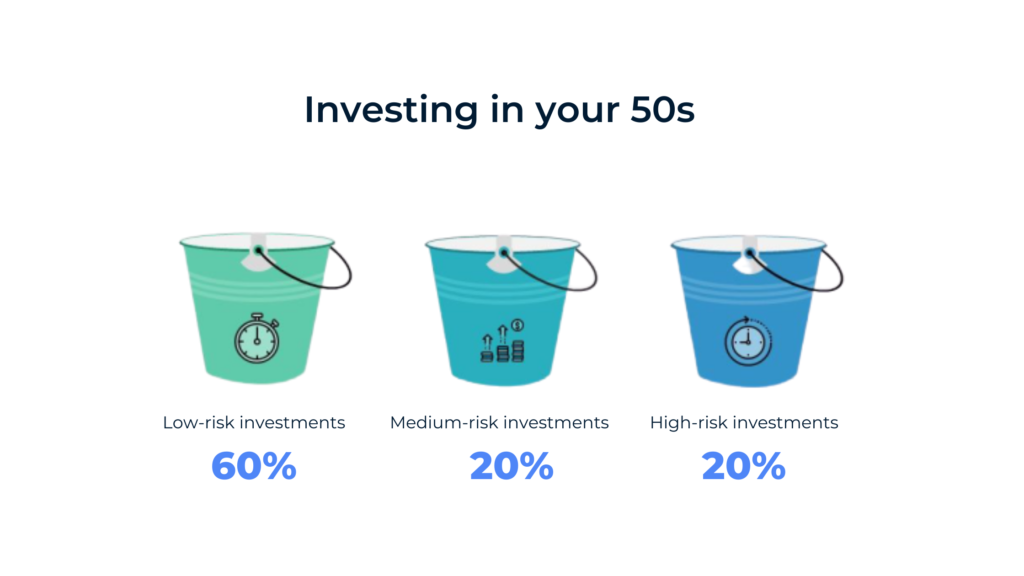
Choose to be more conservative with your investments and move most of your investments into low-risk investment instruments to protect it. Also, re-evaluate your retirement goals and ensure that you’re on track. This is necessary to analyze if you’re taking too much risk on your investments and retirement savings.
Investing in your 60s and beyond
You are at the age where you should sit back and enjoy the work your money has done for you. Keeping a small portion of your money in medium-risk investment instruments will help beat inflation while the low-risk investments will provide for living expenses. Continue to move your funds towards safer investment instruments as you get older.
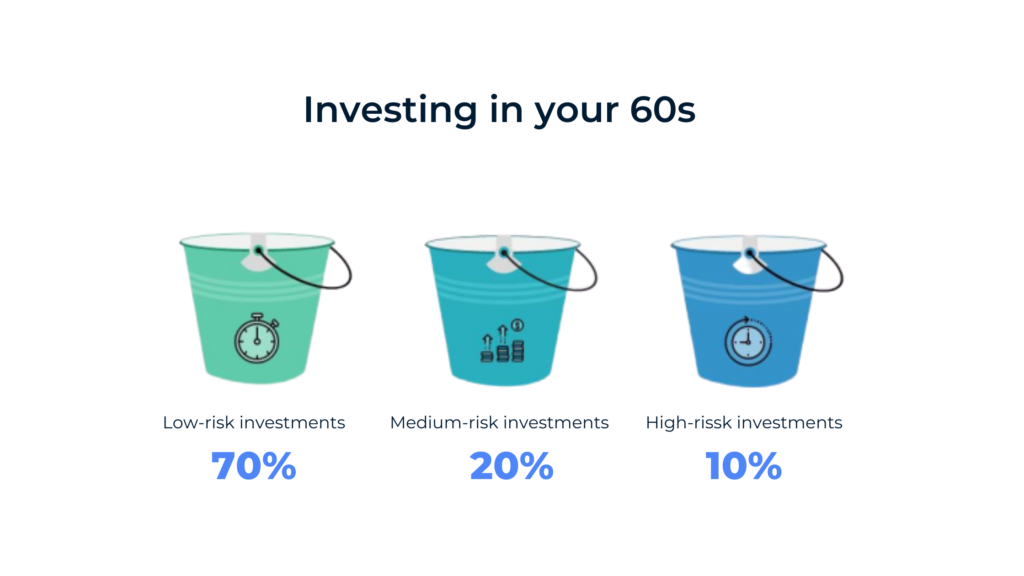
Investing needs and goals change as you get older. Adjusting your investment portfolio to suit your age and lifestyle will keep you from losing all your money.
